


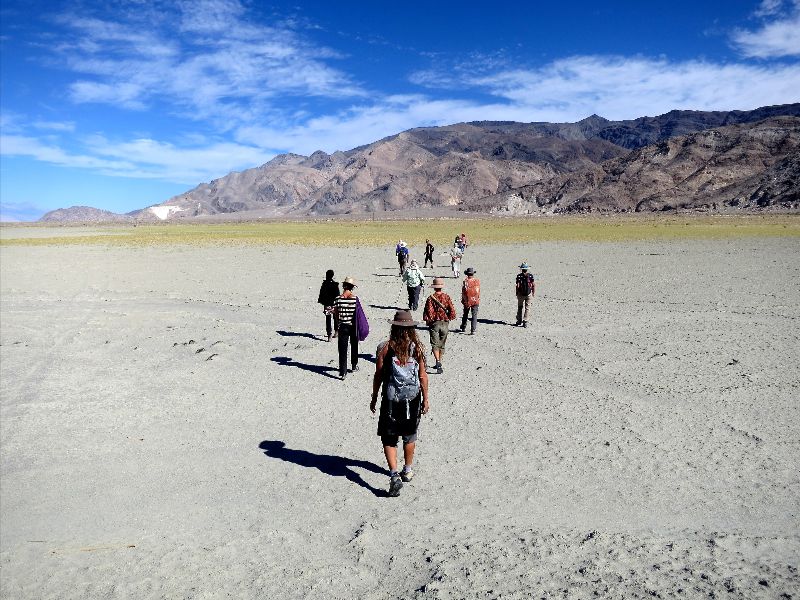
Walking with Patsiata 2015 – photo: Jasmine Beaghler
Lake to Lake 2025 – September 01st to 22nd
KOOTZABBAA TO PATSIATA
Dear Friends,
As we get closer to the beginning of our 2025 Lake to Lake walk, we are often asked, “what does Walking Water actually do?” So, as part of our prep, we wanted to share a little more, especially for those new to our work …
Water as Guide
One of our commitments within Walking Water is we are not here to ‘teach’ others how to restore our relations with water. Instead, we live into and deepen our own relations with water and invite others to do the same. In essence, we commit to water being our guide. This shapes the way we organize, the way we make decisions, as well as how we work with partners and the spaces we are able to create with them. There is a fluidity, an inclusivity, and an ability to move with different rhythm and pace. Our intention is to invite people together to experience community, and trust the emergence that arises from water as guide.
In so many ways this has led us, time and time again, to Indigenous leadership – where our practice becomes less human centric and more water, land, all beings centric. Within that form of leadership, power dynamics within the dominant system no longer have traction in the same way. As Kyndall Noah states: solidarity becomes a commitment to accountability and action.
“Walking Water has helped create space for Native voices to lead and to bring critical awareness to Indigenous issues that have long been erased or dismissed. The Lake to Lake Walk is a journey of intention, gratitude, and respect. It centers Native voices not as participants but as leaders. For non-Native supporters, it offers an opportunity to listen deeply, to move at the pace of relationship, and walk with humility and care. Solidarity isn’t performative; it is a commitment to accountability and action that goes beyond words. It means showing up, especially when it’s uncomfortable, and standing with us in the fight for land, water, and the future of all our relations.”
– Kyndall Noah, Communications Specialist – Owens Valley Indian Water Commission.
Bearing Witness
The term “Bearing Witness” originates from Zen Buddhism, particularly within the Zen Peacemakers Order founded by Bernie Glassman. It is a practice of engaging with suffering, both personal and collective, with openness and compassion, rather than judgment or avoidance. It is a very active practice that asks us to listen, to be present to all voices, to see who is ‘in the room’ or not, to bring curiosity first. Bearing witness trains us to not fill the space but instead we have the opportunity to offer and be with our agency to position ourselves within the circle.
In terms of California water and in particular, the relationship between Payahuunadü and Los Angeles, we hear and witness many stories that are deeply unjust – and have been for over 100 years. That level of on-going trauma, extraction and conflict, perpetual dismantling of cultures, too often leads to a linear, dependent, power-over relationship. Bearing Witness in Walking Water means showing up in challenging conversations as well as in silence – it means understanding the privilege of a ‘not from here’ position and voicing what cannot always be said by those involved. It means showing up in a way where just our presence re-shapes the linear relationship from 2 voices and opinions to now at least 3.
Embodied Experience
We choose to walk, to be in connection with lands and waters, as we know experiences that help us be in our bodies by using our bodies are essential for our understanding of ourselves and the world around us. Oftentimes, the crisis of access to clean drinking water is not understood until the water no longer flows from our own faucet. When we walk with the lands, waters and peoples in Payahuunadü to Los Angeles, we feel the relationship connecting those places and, from this experiential awareness, our decisions are sourced differently. When we walk with the extreme heat, the dryness, harsh winds and dust in Payahuunadü, we become physically aware of the many sacrifices the lands, waters and peoples have and continue to make in order for Los Angeles to receive 30% of its water needs via the LA Aqueduct. This changes us in the most profound ways.
“Walking Water invites both a mental and physical shift in how we relate to water, from harmful and control-oriented to healing and connection-oriented. Walking and reconnecting with the waters provides space for us to practice different ways of being in relationship with ourselves, each other, and the living world. We are implementing these practices through relationship building, coalition development, policy shifts, and on-the-ground projects that move beyond and repair extractive models to prioritize shared wisdom and stewardship. Rather than treating water merely as a resource to be utilized—to be extracted, corralled, and capitalized on—we are relearning how to treat water as a life-giving force to be cherished, shared, and protected. Walking with the waters has inspired us to evolve our purpose and expand our mission, and be more intentional about extending our L.A.-based work into the Eastern Sierras watershed. We believe Walking Water is building needed momentum toward a North-South coalition to advance climate and community resilience for everyone living in Payahuunadü and the Los Angeles region.” – The Accelerate Resilience L.A. team
We begin walking in 22 days …. Come join us at one of our public events – in-person or virtually ….
with gratitude
the WW Collective