


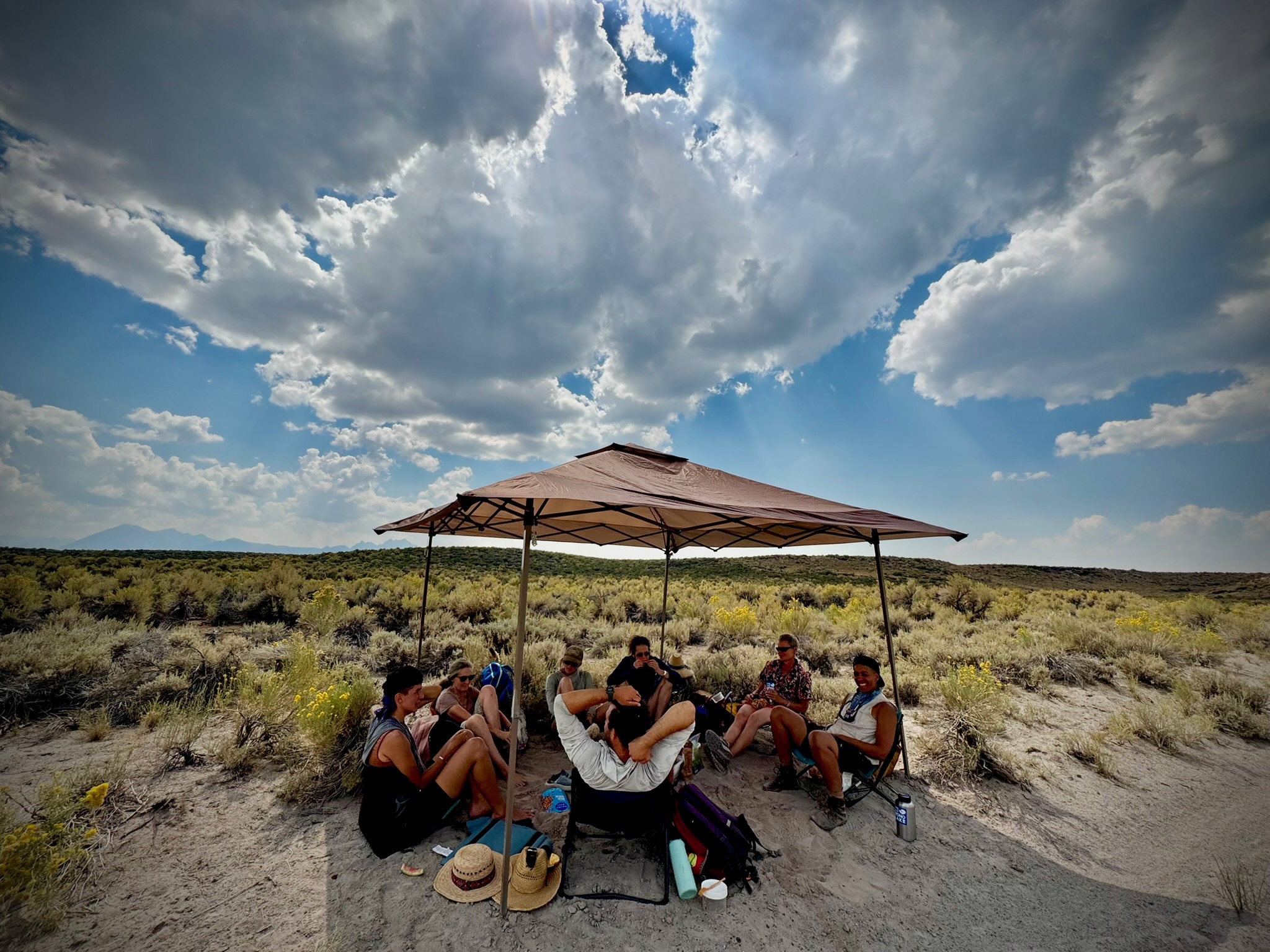
Photo credits: Shawn Berry
An Aqueduct Runs Through it: Headwaters lead to tailwaters. Know the path.
by Shawn Berry, Sep 14th 2025 – originally published on Substack
We were ten days in. I was part of the logistics team for the Walking Water event: a three week water awareness walk snaking across a path of trails and access roads from Mono Lake to Owens Drained Lake covering nearly 150 miles. It’s a walk-as-prayer for the restoration of Payahüünadu; the Paiute name for what is more widely known today as the Owens Valley and translates to the land of flowing waters, or the place where water flows. Except, the water doesn’t really flow there anymore. At least, not like it used to when the local bands of the Nüümü people could easily meet the bulk of their protein needs by fishing the valley’s numerous rivers, lakes, and marshes. Bountiful harvests from fields of native food-producing plants watered by irrigation projects, and hunting the plentiful game that a wetlands ecosystem supports, contributed to a steady food supply. Ample for the 3,500 or more members spread across twelve districts at the height of Nüümü civilization; the most recent descendants of Indigenous peoples who called the valley running between the eastern Sierra Nevada and Inyo Mountains home for nearly 10,000 years.
So…why exactly are people walking from Mono Lake to Owens Drained Lake? Quick history lesson: in 1913, the Mulholland Aqueduct project began diverting water from Owens Lake to a thirsty civic startup—Los Angeles—some 300 miles away. Fifteen years later, Owens Lake was an empty basin. The surrounding water table had dropped so significantly, it prompted a reassessment of the region’s 1,500 square mile ecosystem and literally pulled the plug on a sustainable way of life for people native to the area that had been ongoing for untold generations.
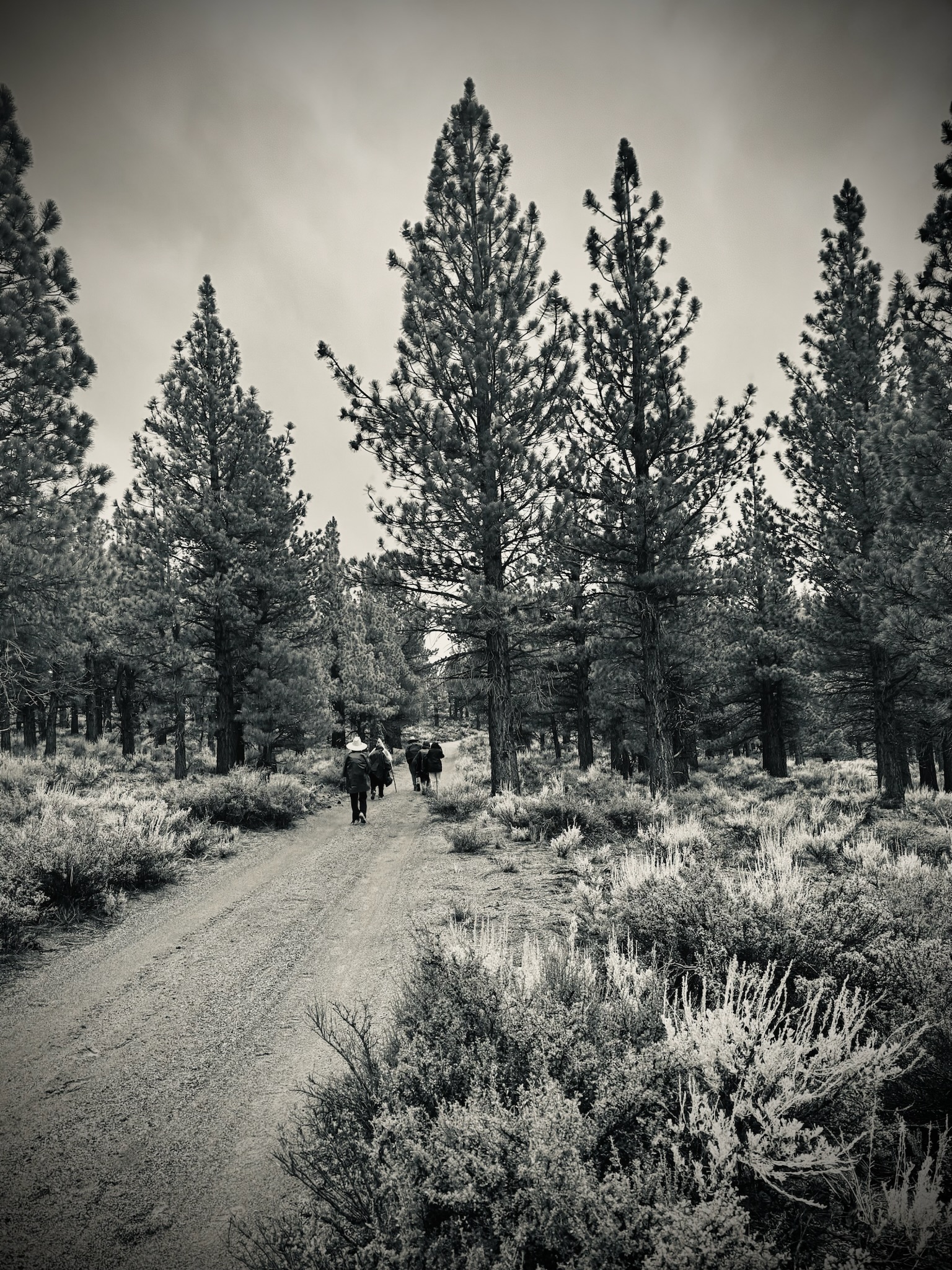
Once designated a thriving wetland-lake system, Owen’s Valley now bears the classification of a dry alkali playa. As a parting gift, it also became the largest single source of dust pollution in all of North America after the 100 square miles of water up to 50 feet deep was funneled down to Los Angeles. For you math-is-fun types, that’s 130 billion gallons a year—or, 326,000 gallons (approximately 1,400 olympic-sized swimming pools), drained from the lake every day. For fifteen years.
If you want to read up on one of America’s great tragedies of capitalism displacing indigenous people and destabilizing an environment, poke around for the Mulholland Aqueduct story and its legacy of the Los Angeles Department of Water and Power (LADWP). Fascinating. Gut-wrenching. But that’s where the history lesson ends and we move on to contemporary social studies. The Nüümü people, such as the Paiute and other Indigenous peoples, still live in the valley today, still call for the waters of their ancestral lands to be returned. And there’s gems of side stories adorning the setting of this center stone tale. This is why there are people walking—pilgrimaging, from lake to lake—or… were walking.
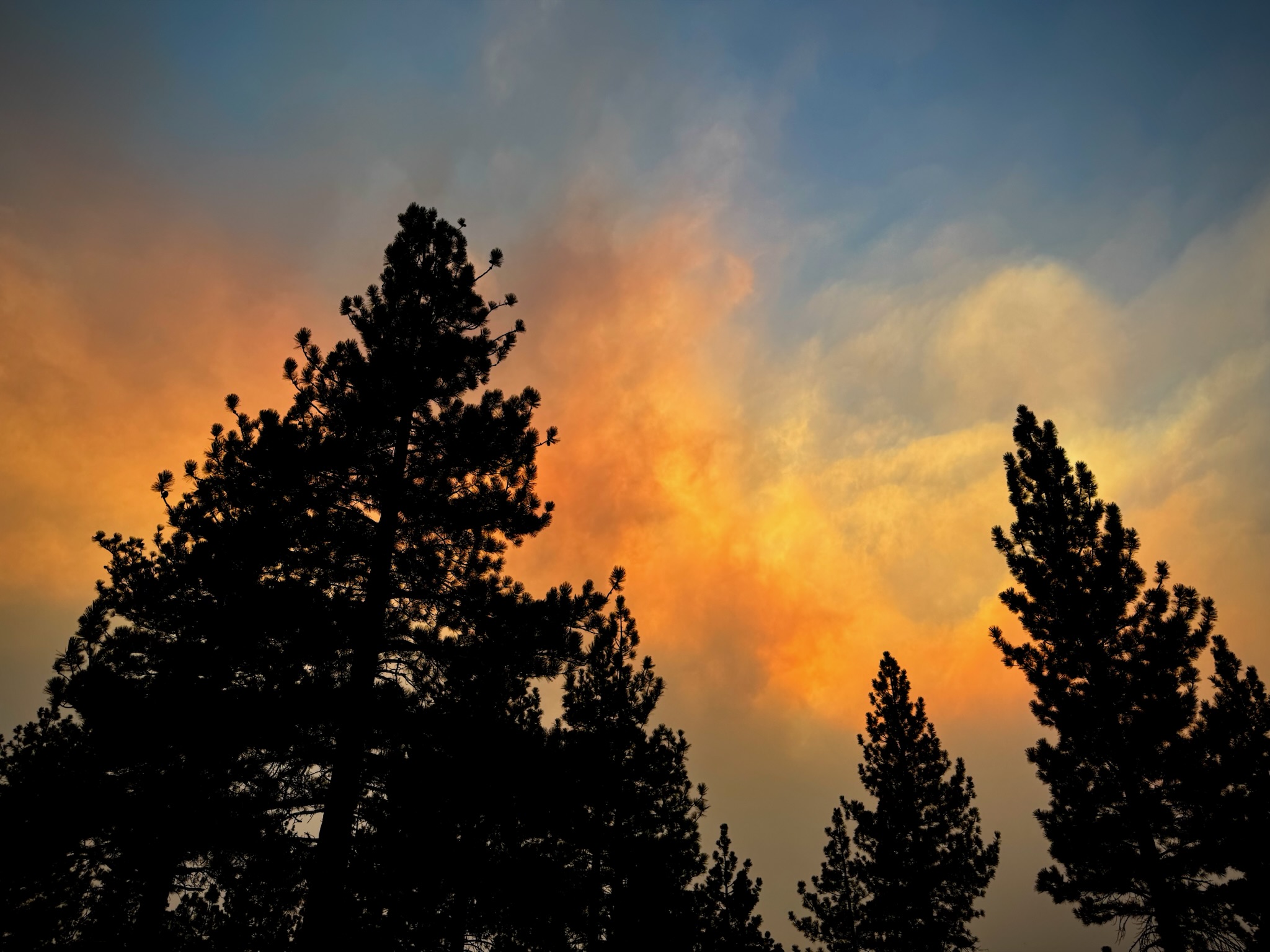
Alas, call it Spirit, the Ceremony, the Land (how to capture “it” in name?)—there was a conspiring from above, below, and beyond the intent of our soft-bodied, bipedal human consortium. Between support vehicles struggling to move through earlier-approved, off-road routes, a lightning storm starting a fire unnervingly close to walkers on the trail, a support vehicle breaking down, and a massive, smoking wildfire sending the Air Quality Index of our course into the mid 300’s for days in a row, a transmission was received. We sat in numerous lengthy councils to discuss our predicament, parsing the code of the dispatch meticulously and patiently through heart and gut until each of us were able to verify the message: This was not the time to walk.
This…was not…the time…to walk.
As a ten year anniversary from the first walk in 2015, and with over twenty organizations involved supporting this year’s walk, including the LADWP, anticipation of the success of this walk was high. There was a tremendous amount of contribution, collaboration, investment, planning, and support; time, money—the resources of whole organizations—that had committed to see this walk through.
Naturally, there has been a tremendous amount of disappointment, sadness, frustration, upset, and a dozens of conversations with organization leaders notifying them of the walk’s drawdown and postponement. But there’s much more going on than that convention explanation. How to explain…
Not only had we been called to stop walking, but to listen. To listen deeply. The kind of listening you can only do when you are still in your body and quiet in your mind. What is the water of Payahüünadu really asking of us through this? Clearly it wasn’t to just walk and pray. It’s almost as if Payahüünadu has been testing the veracity of the project. A decade’s worth of kicking it’s tires to determine whether it was up to the real task ahead. Perhaps the project has now passed a stress test, certifying its maturity and experience as competent and mission-ready to grapple with the water’s real ask. A request beyond what we hominids could envision with only our eight decades or so to grasp a conversation that water and the land have been having for billions of years. Whatever could that mission be?
So, here I am sitting in a coffee shop in Ojai California processing what was an intense week-and-a-half effort to help keep the walk on the (t)rails, only for it to come to an abrupt end after a year of mapping the routes, acquiring the permits, the gear, vehicles, food, finances, participants, enrolling communities, and blocking out schedules. I wasn’t part of any of that. But indeed, throughout the loading and unloading of water containers, pop-ups, laden coolers, stoves, food bins, backpacks, and propane tanks on the daily, and sitting in circle listening in to the walkers share what was coming through their prayer and pilgrimage alongside each and every segment of the waterway, I have plenty experience to process nonetheless. Let me use watery words to clarify: I am saturated with exposure and experience. There’s plenty to absorb and much is still sloshing around in my noggin and splashing over my heart strings. A strong current streams through my awareness now about the water story in that land and every land.
I’ve been thinking about the waters flowing off of, and from within Boulder Mountain Utah where I’ve lived the past year. Water that melted from the snow and soaked in from the rainstorms, filling up the aquifers and pulsing it through its springs. It’s this same water that greens the grassy meadows the pronghorn, elk and deer graze. It fills the lakes and ponds dotting the slopes that I’ve swum, drank, and fished from. The same water that winds down rivers to the lowlands and fills the reservoirs. The very same waters that irrigates the fields and gardens of homes, and flows through the faucets and shower heads of the townspeople who scrap regularly about the water rights the mountain provides in town hall meetings. Water is life.
The day before the team dispersed, we drove to the shore of Owens Drained Lake. Car wheels crunched on the dusty gravel as they delivered us to the destination our feet had intended to, but twelve days early. Indigenous and other community leaders joined us. A circle of twenty or so of us stood, sharing gratitudes and a passion for the vision of Payahüünadu restored. As we spoke our heartfelt words, and a young indigenous woman sang a traditional Eagle song in her native tongue, jet fighters from the nearby Air Force base practiced maneuvers at low altitude seemingly right above us. Their subsonic thunder drowning out our efforts to share. In my mind I tried to spin it for myself, imagining it as a foreshadowing of a celebration of victory commemorated by a show of power in some future time of a successful restoration. But this silly notion was no contender for the hackles of anger rising up on the back of my neck. This must be what oppression feels like, came the thought, barely audible in my own mind above the incessant, ear-ringing roar. I could hardly stand the diminished sense of freedom I felt for the thirty-some minutes it ensued. Meanwhile, this was the mental state of some people’s entire experience of life from cradle to grave.
I looked out across what was once a truly great lake in hopes of dissuading my anger and despair. The vast maw before me yawned a deep, desiccated depression. I couldn’t even see the other side of it. Standing there, barely a quarter mile off of highway 395, we would still be under the lake’s surface by several meters had this great body of water been left to its own sovereignty. I felt a wave of grief sweep through me, my eyes welling hot.
It’s hard to know what to make of that moment; commemorating an aborted walk as an Eagle song soared, and jet fighters dived. A massive, dry crater in place of a lake long gone silently engulfing us while my anger and despair turned to impatience in the morning heat amidst a mix of people from all walks and wounds standing together longing for restoration of a place and people. I’ve already tried a few times to make sense of it, but meaning still escapes me. Like water cupped in my hands; It too quickly drains through the cracks and crevices of my fingers before I’ve gotten a good drink of it.
Remember, all of us come from indigenous peoples. Yes, you too had a people with rich traditions and culture that called a land home for generations and generations. A land with water that ran through it, fell upon it, pooled below it. Contemporary Indigenous issues and water concerns today, no matter where you currently live, are a reminder and a call to mourn and grieve your own loss of ancestral indigeneity and place—no matter how distant in time they are. Grieving offers us a sanctioned space to feel the wholeness of our losses, giving our hearts and minds time to reconcile painful experiences and discover the peace and growth they hold for us. This allows us to return the full spectrum of our authenticity and awareness to the present moment, unrestricted by preoccupations of who we might have been while undergoing painful events of the past. Grieving is healing. Healing reawakens us to the freedom we have to choose who we are here and now, and to the potent agency we each have to respond to others who are enduring painful events—whether simply comforting a close friend, or taking a stand against generational social and cultural injustices of today.
If you’re curious to know more about the Walking Water organization, the vision it holds, its co-founder, Kate Bunney, the yearly awareness walks that take place, and how you can support the vision, visit: Walking Water Collective.
Roughly seventy percent of your weight is water, essentially making your body a water catchment vessel for about 11 gallons of tailwaters. But beyond the tap or bottle you dispense it into your body from, where did those headwaters come from? Dive in and take a look. Here’s a great place to start: Global Watersheds. There’s a good chance you’ll be surprised to discover what environmental, social, or cultural injustices you are fighting—or supporting—with each gulp.
Thanks for the read.