


Walking into the Unexpected: a day-by-day account of the Lake to Lake walk
September 2025
By justine epstein
We had been walking for nearly a week, a dozen walkers and logistics team who came together in a community of practice to follow the waters from Kootzabbaa/Mono Lake to Patsiata/Owens Lake with a prayer to restore our relations with waters, lands and peoples. After a week of navigating smoke from the Garnet Fire on the western side of the Sierras, lightening, wildfire, flood warnings and several ensuing evacuations, our spirits were still strong and committed to the long arc as we prepared to widen our circle to welcome many more to walk with us, share with us, learn and bear witness together to the water story of these lands.
That is not what happened. The winds shifted again and the smoke returned. The air was thick and ash poured down from the sky. Our phones told us that the air quality was somewhere between 300 – 500 AQI – hazardous for anyone to breathe, even in the best of health. It was no longer safe for us to continue walking.
We made the heartbreaking yet clear decision to close the Lake to Lake walk much earlier than planned on September 9th, following the clear guidance of the land, the fires, and local leadership. We are left with the task of making sense of what the ceremony of this walk gave to us, individually and collectively – to be with the trouble of our times, the wisdom of the unexpected, and the grief of opening our hearts to love a burning world.
As a part of integrating from our journey, it feels important to share the following notes from the trail – a mosaic of experiences, stories and insights to offer a glimpse of life on the walk that happened. We offer them here in the hopes that, together, we might bear witness and begin to make sense of what we can learn from the pivots, the fertile ground of mystery.
Day 1
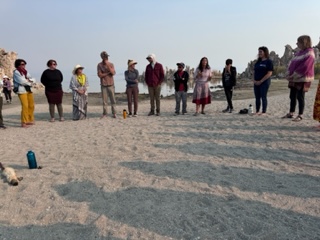 Photo by Kristin Rothballer
- We begin with our Opening Ceremony at the South Tufa Area of Kootzabbaa with Charlotte Lange, tribal chairperson of the Kootzaduka’a Tribe, bringing prayers and blessings from many watersheds and connecting with Patsiata, the sister-lake. Charlotte shared stories of her childhood at Mono Lake and the healing power of this body of water. Leslie Bellas, Lone Pine Paiute Tribal member, also joined on behalf of Kathy Bancroft, Elder of Lone Pine Paiute Tribe and Walking Water partner.
- Those of us walking skirt Panum crater and head south through sage, rabbit brush and mountain mahogany. We are joined by past and present leadership of the Mono Lake Committee, who share about their 1984 landmark legal case to keep water on Mono Lake, reached an agreement with Los Angeles Department of Water and Power (LADWP) in 1994: State Water Resources Control Board Decision 1631.
- Amongst the context and stories shared, we bear witness to the Mono Lake Committee’s 30 year struggle to get LADWP to abide by that good faith agreement. After 30 years the lake has yet to return to the level agreed upon.
- According to the agreement with LADWP, the mandated “management level” for Mono Lake is 6,392 feet above sea level. The current water level stands about 6,382 feet, about 10 feet below the agreed-upon level, which has had significant impacts on human, wildlife, and water health.
- The air on our walk is full of smoke, intensifying throughout the day. We can barely make out the shape of the mountains to the west. After a delicious meal generously donated by and continued conversation with our guests from the Mono Lake Committee, we take refuge from the smoke at the Outdoor Education Center overnight.
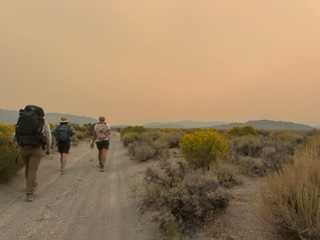 Photo by Kristin Rothballer
Day 2
- We wake to clear skies and our first view of the mountains. After packing up, we sit in circle and offer our farewell to Walking Water guardian and co-founder Gigi Coyle. One of our practices is to leave a water blessing with the waters we have gathered from around the world, in each place we stop.
- After some logistical hurdles and hiccups that delay our start, a small group of 7 begins walking around mid-day. Graced by cloud cover, we walk into Jeffrey Pine forest and rejoice in the arrival of a gentle blessing rain.
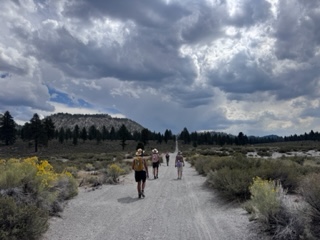
- A little over 2 miles in, just as we stop for lunch, the thunder begins rolling and flashes of lightning get closer and closer. Lightning strikes a few hundred feet from where we were sheltering…
- Once we start walking again we come across the beginning of a wild fire, flames dancing on a forest hillside a couple hundred feet in front of us. Having just discussed our emergency protocol around encountering fire, we call 911 to report the fire and decide to evacuate.
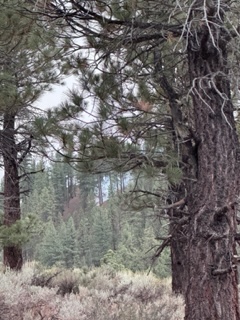 Photo by Kristin Rothballer
- Once to safety but still on a dirt track road, we wait for a vehicle pick-up by playing improv games, dancing and singing. Rain, thunder and lightning continue around us.
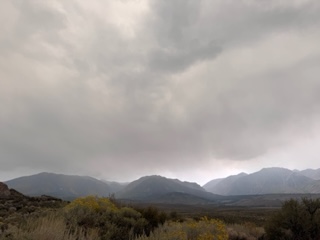 Photo by Kristin Rothballer
- We are gratefully hosted in a private home in Crowley Lake, rattled but in good spirits. To our understanding, the fire we witnessed has been put out by the ensuing rain.
Day 3
- Following the storm, we wake to a gorgeous foggy morning and clear skies. We drive back to the trail, beginning from the planned basecamp we did not reach the day prior.
- We offered the practice of walking with questions as a core best practice of Walking Water. For our first miles in silence, we ask: what are the questions we are each walking with?
- It feels good to be back on the trail, supporting us to settle into more of a walking rhythm through Jeffery and Ponderosa forests. We celebrate clear air and blue skies.
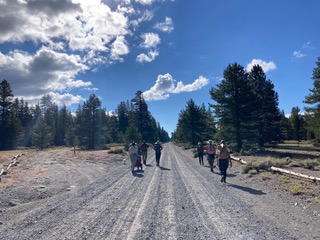 Photo by Justine Epstein
- We arrive mid-afternoon to Big Spring campground (sacred headwaters of the Owen’s River). We are now in Payahuunadü – place of flowing waters. After settling into camp and some of us jumping into the freezing water, we circle up to begin a conversation around Group Agreements and best practices of community living.
- Dinner is generously provided by local leaders of Range of Light – part of the Toiyabe Chapter of the Sierra Club chapter representing the Eastern Sierra who share about their tireless work to protect the Bodie Hills from open pit gold mining, as well as their decades long fight to return water and ecological wellbeing to the Owens River and Payahuunadü. We go to sleep with gratitude for all those working to protect the valley and these waters.
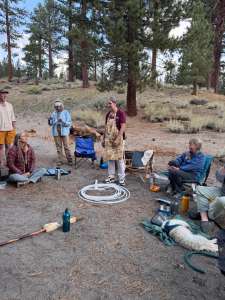 Photo by Kristin Rothballer
Day 4
- Anticipating a long 12 mile day, we depart Big Springs with the question “what does it mean to bear witness?” Bearing Witness is another core practice for Walking Water.
- Before walking, we pause by one of the springs and offer blessings to these waters pouring forth from the ground, before making our way down Owens River Road and meeting the headwaters of the river we will follow all the way to Patsiata. We notice charred forest landscapes from past forest fires, private ranches, and an abundance of raptors.
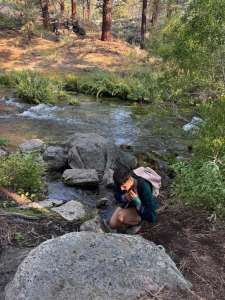 Photo by Kristin Rothballer
- We follow a long direct road through scrub and sage brush, observing cow tracks and a skeleton of some unknown creature. We are blessed by a sprinkle of rain during our lunch break and the gift of some cloud cover as the landscape shifts to vast meadows. We pass through herds of cattle grazing and witness tributaries of water meandering across the wide valley.
- Arriving to camp across a white bridge, we joyfully revel at the sight of river weed dancing in the current. We stay in an alkaline meadow next to Hot Creek, where we’ve received permission from local ranchers to stay the night. We are gleefully surprised to discover that the water of the creek runs warm and offers delicious softening of sore muscles.
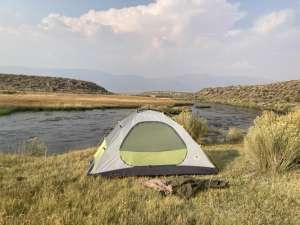 Photo by Justine Epstein
- A sunset glows on the horizon through the smoke. We are visited by many birds including peregrine falcon, white pelicans, and more!
- It’s a dewey night. Lightning on the horizon, mosquitos buzz, howl of coyotes and moo of cows as the thickening moon arcs overhead.
Day 5
- Steam rises from the hot creek as dawn light emerges. The silhouette of cows cross the water as the light arrives into the landscape.
- We pack and circle up, offering song and water, and the question and best practice: what does it mean to follow water as our guide?
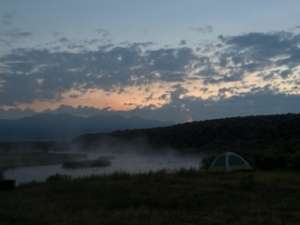 Photo by Justine Epstein
- We continue south, taking a water break at Wild Willy’s hot springs and share insights from our silent walk through desert shrub.
- We crest a ridge and make our way to the shore of Crowley Lake, a human-made reservoir built and owned by LADWP to store water for Los Angeles and Orange County. There we catch a boat ride from Vince who works for Crowley Lake Fish Camp. He’s full of stories and information about the Lake, from its geological origins as a volcanic caldera to the current navigations of algae blooms with the fluctuations of lake level due to LADWP use.
- Vince shows us stunning chalk columns, a mystical geological phenomenon of white spiraling pillars on the lake’s eastern edge. We also learn that beneath us, the Owens River and tributaries are still flowing. The fish often congregate in those cooler streams of water, a living map of water’s original shape in this place.
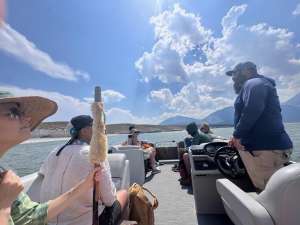 Photo by Kristin Rothballer
- Vince drops us off near the dam on the southern end of the lake and we stop for lunch by a gate to the dam facilities and a sign that says: “Private Property of the Los Angeles Department of Water and Power.” As we sit, several LADWP trucks drive past, a reminder of the colonial dynamic of this place.
- For the final miles of the walk we wind through volcanic boulders, witnessing the energy of mountain lion and storm clouds that gather overhead. We end at the Upper Owens River gorge, watching storms circle us and fire helicopters pass by gathering water from the reservoir
Day 6
- A much needed rest day to do laundry, take solar showers, rest, and prepare to welcome the Coalition-Building pod in the coming few days. The intention of this pod was to bring together members of LA water agencies, tribal leaders, funders, and community organizations focused on water from both Payahuunadü and Tongvangaar/Los Angeles to walk with the theme of what it means to build a coalition to design an equitable water future for both communities.
- In the late afternoon, the winds shift and the smoke begins to thicken. Just around dusk as we are buttoning up camp, a handful of us begin to feel uneasy with the conditions and wonder about our options. In an abrupt moment of haphazard decision-making, a handful of us decide to take a vehicle and spend the night indoors in Bishop, while the rest stay the night through the worsening smoke.
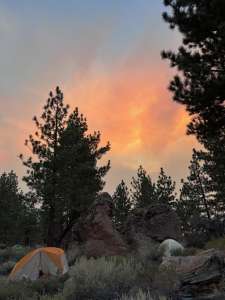 Photo by Kristin Rothballer
Day 7
- We all reconvene early at camp, wearing our N95 masks. The conditions have worsened through the night, and it is unclear if or when they will shift. It is clear that it is no longer safe to walk, so we pack up our camp and seek shelter in the Friends of the Inyo offices in Bishop for the day.
- Acknowledging that some of the group deciding to leave the night prior was made too abruptly and without leaving sufficient time to attend to the full group needs, we spend time in council tending to the impacts of our urgency and collectively holding the grief of the larger global context that we are experiencing a fractal of.
- We are gratefully witnessed by Jen Bravo from ARLA, who, together with Kate and OVIWC Partners makes the difficult decision to call off the LA / Payahuunadü Coalition convening based on the hazardous smoke conditions.
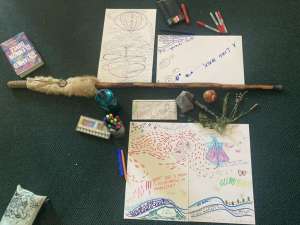
Photo by Justine Epstein
- In the afternoon we circle up again to collectively ask “What now?” It is the first time we begin to discuss the possibility of ending the walk early. We decide not to make this decision too urgently, and turn towards finding indoor places to stay the night. We are graciously hosted by local neighbors in Bishop.
- In a reprieve from the smoke, some of us go for a swim in the Owens River around sunset, finding joy and relief in riding the current. Almost immediately after we pile back into the cars, a wall of smoke moves south, suffocating the valley. It stays throughout the night.
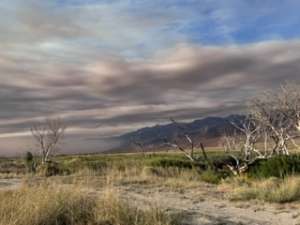 Photo by Shawn Berry
Day 8
- Waking to thick smoke again, we pack up and drive south down Hwy 395 to Three Creeks, where we are graciously welcomed by the stewardship team with lung-support tea and an indoor space in their Community House to gather and continue to listen for what we and the walk need.
- We sit in a spiral council with several cushions in the center of the circle, and one by one those called to share take a seat. Over several hours we listen to the emerging wisdom of the collective which is clear – it is not safe to continue walking in these uncertain conditions, and it is not safe to invite so many others into these conditions. It is time to pause, to let go, to surrender, to grieve, and to then see what comes next for the walk, for the prayer…
- Once the decision is made, we are left to each attend to the plans we need to make to care for ourselves, to cook food for our gracious hosts, to be with the changes. We hold the acknowledgement of the privilege we have to choose to leave, and also the importance not to take up space and resources needed to care for those who live in this valley and who will remain through the challenges.
- It is a restless night for many as the smoke thickens again and the bright moon shines.
Day 9
- The valley is filled with smoke once again as we drive south in the morning to Patsiata, the Owens Drained Lake. Joined by Leslie Bellas of the Lone Pine tribe, Alan Bacock of the Big Pine tribe, the 3 Creeks Collective stewardship team, Ben Holgate, and Meredith Hackleman who also showed up on behalf of Kathy Bancroft, we pass around the bottle of water we have carried, and each are invited to share and offer some of the water to the lake bed with the prayer that water will return here.
- As we share, fighter jets from the nearby Airforce Base begin flying rounds around the lake. The sound is deafening. Three Creeks Steward Jeanine Lomaintewa from the Bishop tribe sings an Eagle song as the jets rip overhead. The dissonance of the sounds of song and war is a moment of embodied paradox of this moment – the truth and the heartbreak of our world on fire. The horror of the history that led us here. The immense need to transform how we live and not knowing how we get there. It reaffirms our conviction and prayer for water and for life.
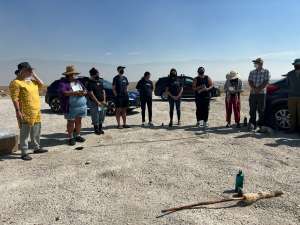 Photo by Margot Biehle
- After the closing, it is clean up, gear shuffle, food sorting and preparations to scatter like seeds to the wind, each of us continuing our pilgrimage in different and unexpected ways in the days, weeks, years, and maybe even lifetimes to come.
This is the glimpse we have to offer now, knowing that the story isn’t over, so long as the water still continues to flow. So we are left here to hold these fragments of meaning, piece together a story, and wonder where we go from here.
I am taking guidance from candlemaker jonah aline daniel of Narrow Bridge Candles wrote recently in a missive called Good Grief :
“Now, I most want to know how to do all of it from an open heart, with a broken heart, from within a heart centered life… Only by refusing to numb ourselves to pain and fear and uncertainty, will we be prepared to make the changes that are required of us to build this new world we so desperately long for and need. When we refuse to be numb, when we bare our hearts to the cruelty and injustice of this world, we also access its ancient wisdom, its creativity, its truths, its guidance. Only then will we have what we need to truly dismantle the harmful systems that comprise the structures of our lives so insidiously. When we live a heart centered life, we are powerful beyond our wildest imagination.
Our hearts break and break and break. Witness, accompaniment and care are among the spiritual resources we can access to meet the excruciating present moment, moment after moment. Sometimes it seems they are all we have… We let our hearts break so our spirit doesn’t (Andrea Gibson). And we continue.”
In good grief, may we continue. We are grateful for your bearing witness to our journey, knowing we each hold and walk the prayer for water wherever we are.